Chuttamalle AI Video Explained: The Viral Devara Deepfake and the AI Video Trend - AppHall
Chuttamalle AI Video Explained: The Viral Devara Deepfake and the AI Video Trend
The Chuttamalle AI video trend has sparked both controversy and curiosity. This article explains the viral Devara deepfake, how AI video manipulation works, why the clip became a major talking point, and how motion transfer and AI dance tools can be used responsibly to create original, consent-based videos.
If you have recently searched for “Chuttamalle AI video,” “Devara Chuttamalle song AI,” or “Chuttamalle song viral video,” you may have noticed a sudden wave of posts, discussions, and AI-generated edits connected to the popular song from Devara: Part 1.
But there are actually several different things being grouped under the phrase “Chuttamalle AI video.”
One is a controversial non-consensual deepfake that recently went viral. Another is a much broader trend of creators using AI video tools to recreate dance movements, animate photos, replace characters in videos, or generate original dance scenes inspired by cinematic music videos.
Understanding the difference matters.
What Is Chuttamalle?
“Chuttamalle” is a Telugu song from the 2024 film Devara: Part 1, starring Jr NTR and Janhvi Kapoor.
The song was composed by Anirudh Ravichander, with vocals by Shilpa Rao and lyrics by Ramajogayya Sastry. Its romantic visual style, choreography, locations, costumes, and chemistry between the performers helped make it one of the most recognizable songs associated with the film.
Long after its original release, however, “Chuttamalle” returned to online conversations for a completely different reason: artificial intelligence.
Why Is “Chuttamalle AI Video” Suddenly Trending?
In early October 2026, reports emerged about an AI-manipulated version of footage associated with “Chuttamalle.”
The altered video falsely depicted actress Janhvi Kapoor in sexually explicit circumstances that were not part of the original film or music video.
The clip spread across social platforms and quickly attracted criticism from fans, actors, and other figures in the Indian film industry.
Jr NTR publicly condemned the manipulation and warned against both creating and circulating the material. Janhvi Kapoor also spoke about the violation involved in using AI to manipulate a person's likeness without consent.
This controversy caused searches for phrases such as:
Chuttamalle AI video
Chuttamalle song viral video
Chuttamalle AI deepfake
Devara AI video
Janhvi Kapoor Chuttamalle AI
Chuttamalle AI generated video
to increase rapidly.
One important point is often missed: the viral manipulated clip is not an official alternative version of the song and is not a scene from Devara: Part 1.
A deepfake is synthetic or manipulated media in which AI is used to change someone's appearance, face, voice, body, or actions.
Modern AI systems can perform tasks that once required advanced visual-effects teams.
For example, AI can:
replace one face with another;
transfer movements from one person to another;
animate a photograph;
change a character while preserving choreography;
generate entirely new video frames;
imitate expressions and body movements.
These capabilities can be useful creative tools when the people involved have agreed to the use of their images.
Problems arise when someone's likeness is used without permission, especially when the generated result falsely portrays them doing something they never did.
That distinction separates ordinary AI-assisted video creation from abusive deepfake content.
Do We Know Which AI Tool Made the Viral Chuttamalle Video?
No reliable public evidence currently identifies the exact AI model or software used to create the controversial clip.
That is worth emphasizing because viral posts often attach the names of popular AI tools to videos without evidence.
A realistic-looking AI video could involve several technologies, including face replacement, person replacement, video-to-video generation, motion transfer, compositing, or multiple tools combined in an editing workflow.
Without information from the creator or a technical investigation, identifying a particular model based only on the finished clip would be speculation.
The Other Side of the Chuttamalle AI Video Trend
The controversy has also created interest in a different question:
Can AI make a dance video using my own photo?
The answer is increasingly yes.
AI video generators have evolved beyond simple text-to-video systems. Many newer tools can use images and reference footage to control the character or movement appearing in a generated video.
That makes several types of Chuttamalle-inspired creations possible without impersonating an unwilling person.
1. Photo-to-Dance Video
A creator can upload their own portrait and animate it into a short dance sequence.
Instead of manually creating a 3D character and animating every movement, an AI model synthesizes the intermediate video frames.
2. Reference-Video Motion Transfer
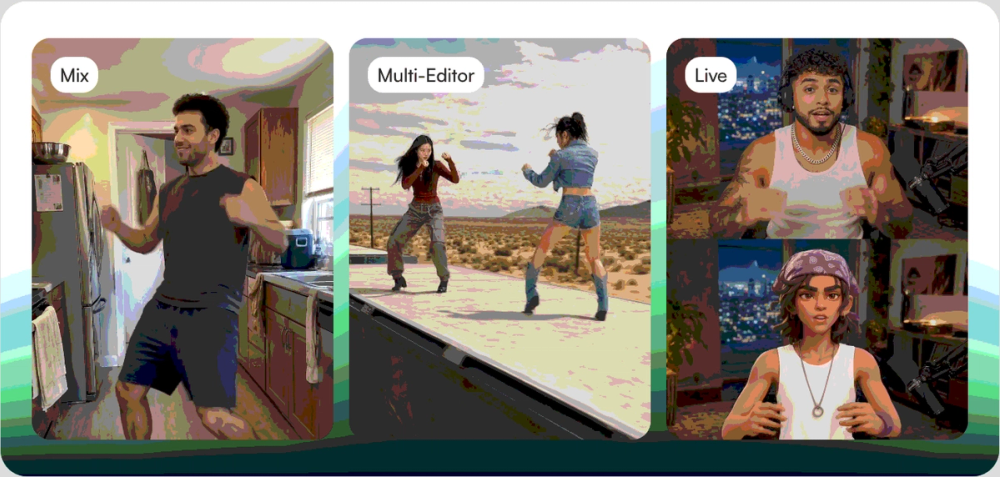
Motion-transfer tools use an existing video as a movement reference.
For example, you could record yourself performing choreography and use that movement to animate an original character.
Some systems can preserve surprisingly detailed body movement, including arm gestures, turns, walking, and dance steps.
3. Character Replacement
Another workflow replaces the performer in a reference video with a different character.
This can be used for fictional characters, avatars, original illustrations, or images of yourself.
Modern systems attempt to preserve the camera movement and choreography while generating a new visual identity for the performer.
4. Two-Person AI Dance Videos
Newer video models are also becoming better at scenes involving two characters.
A creator may provide two authorized reference photos and generate a short cinematic dance scene featuring both people.
This approach does not necessarily reproduce the original Chuttamalle choreography. Instead, it can produce a newly generated scene inspired by the general idea of a romantic cinematic dance.
Why AI Dance Videos Are Becoming Popular
Dance videos are particularly suited to generative AI because the result is immediately understandable.
Users do not need to understand prompts, diffusion models, motion vectors, or video pipelines. The concept is simple:
Upload a picture and make the person dance.
That makes the format ideal for short-form platforms.
AI dance clips also combine several trends that already perform well online:
recognizable music;
transformation videos;
celebrity and movie culture;
memes;
character animation;
short-form video;
personalized content.
A viewer can see the result within seconds, which gives this type of AI content strong viral potential.
Can You Make a Chuttamalle-Style AI Video?
Technically, yes.
A safer approach is to create an original Chuttamalle-inspired dance video rather than reproducing a deceptive video involving someone else's identity.
You might use:
your own photograph;
a consenting friend's photograph;
an original AI character;
an illustration;
a fictional avatar;
your own dance reference footage.
Tools focused on motion transfer and AI character animation can then create a short dance sequence.
For example, platforms such as Viggle AI are designed around transferring movement from reference footage onto another character, making them useful for experiments involving dances and other full-body movements.
The important difference is consent.
Uploading your own character is fundamentally different from creating a fake compromising video of a real person who never agreed to participate.
Face Swap vs. Motion Transfer
These two terms often appear together, but they describe different techniques.
Face swapping primarily changes the face while retaining much of the source video.
Motion transfer takes movement from a reference and applies it to another character.
Modern AI video systems increasingly blur the distinction. Some can regenerate large portions of the body, clothing, background, and lighting rather than simply placing a new face over existing footage.
That is one reason today's AI videos can appear much more convincing than older face-swap clips.
How to Spot an AI-Manipulated Video
AI video quality is improving quickly, so there is no single guaranteed visual test.
Still, suspicious clips may contain clues such as:
changing facial details between frames;
unusual hands or fingers;
inconsistent jewelry;
clothing that subtly changes shape;
strange interactions between two bodies;
unstable hair or edges;
impossible reflections;
abrupt texture changes;
unnatural facial expressions.
Context can be even more useful than visual inspection.
If a shocking “movie scene” suddenly appears online but cannot be found in the official film, music video, studio release, or reputable reporting, verification is important before assuming it is real.
The Bigger Issue Behind the Viral Video
The Chuttamalle controversy illustrates a challenge that will become increasingly common.
Generative AI can now create convincing media much faster and more cheaply than traditional visual-effects workflows.
That opens enormous creative possibilities.
Independent creators can animate characters, produce music videos, visualize stories, create virtual performers, and experiment with cinematic effects that previously required large production teams.
But the same technology can also be used to falsely portray real people.
The technology itself is therefore only part of the story.
Consent, disclosure, and how the resulting media is distributed matter just as much.
Chuttamalle AI Video: Trend or Beginning of Something Bigger?
The search interest surrounding “Chuttamalle AI video” may have started with one controversial viral incident, but the underlying technology represents a much larger trend.
AI video is moving from simple prompt-generated clips toward controllable video creation.
Instead of asking an AI model to invent everything, creators increasingly provide references:
this person, this movement, this camera angle, this visual style.
That shift makes AI video far more useful.
Dance videos are simply one of the easiest ways for everyday users to experience it.
The next generation of viral edits may not require traditional animation, green screens, motion capture, or advanced editing knowledge. A reference image and a short movement clip may be enough.
Final Thoughts
The phrase “Chuttamalle AI video” currently describes two very different developments.
The first is a disturbing example of non-consensual AI manipulation that demonstrates how deepfake technology can be abused.
The second is a rapidly growing creative trend in which AI tools animate photos, transfer dance movements, replace fictional characters, and generate new cinematic performances.
Those two uses should not be confused.
If you want to experiment with the trend, the more interesting direction is not recreating the viral deepfake.
It is using AI video technology to create something new—with your own images, original characters, or people who have agreed to participate.
That is where tools such as motion transfer, character animation, and reference-guided AI video become genuinely exciting.